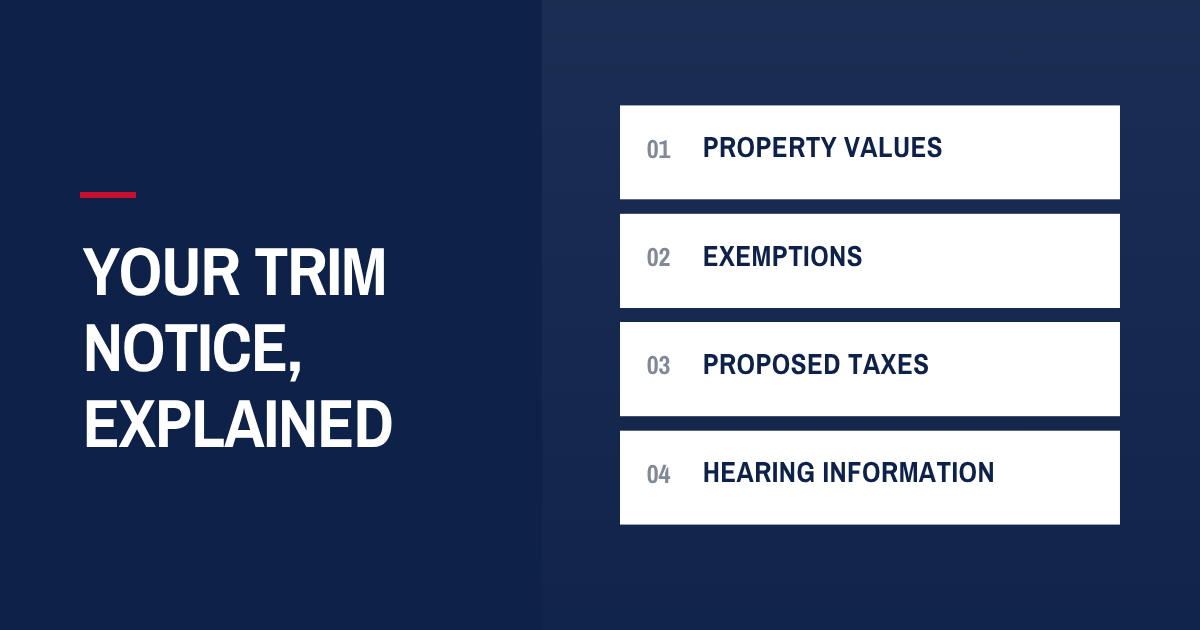
Every year, Duval County property owners receive a document filled with property values, exemptions, proposed tax rates, and hearing information.
It is called the Notice of Proposed Property Taxes, commonly known as the TRIM notice.
The first thing to understand is simple. Your Duval County TRIM notice is not your property tax bill. It gives you information about your property assessment and proposed taxes before final tax bills are issued. Florida’s Department of Revenue describes the TRIM process as a way to show taxpayers which taxing authorities are responsible for proposed property taxes and to provide information before rates and budgets become final. Florida Dept. of Revenue
What is a TRIM notice?
TRIM stands for Truth in Millage.
Florida law requires the Property Appraiser to send the notice to property owners. The notice brings together information about your property’s value, exemptions, proposed taxes, tax rates, and public hearings. Florida Department of Revenue guidance lists August as the period when property appraisers mail TRIM notices. Florida Dept. of Revenue
There is a lot of information on one document, so it helps to know which office is responsible for each part.
Start with the property values
One of the most useful sections of the notice is the property valuation information.
You may see several different values, including just value, assessed value, and taxable value.
Those numbers are related, but they are not interchangeable.
The Property Appraiser establishes property value each year as of January 1. Assessment limits are then applied where appropriate, followed by qualifying exemptions to determine taxable value. Florida Dept. of Revenue
That is why the value you see at the beginning of the process may be different from the taxable value shown later.
When you receive your notice, compare those numbers with the property information you already have. If something looks unfamiliar, take the time to understand why.
Look at your exemptions
The TRIM notice also gives property owners a chance to review exemptions and other assessment information.
Florida provides several property tax exemptions and benefits, including homestead benefits and certain exemptions for veterans, seniors, people with disabilities, and others who qualify under state law. Applications and documentation are submitted to the county Property Appraiser, which determines whether a parcel qualifies for an exemption. Florida Department of Revenue
If an exemption you expect to see is missing, that is something worth asking about.
The same applies if property details or assessment information appear incorrect.
Know who sets the tax rates
This is where the process often gets confusing.
The Property Appraiser determines property values and administers exemptions and assessment limitations. The Property Appraiser does not set the property tax rate. Florida Dept. of Revenue
Taxing authorities set their own millage rates. Depending on the property, those authorities can include county government, municipalities, the School Board, and other taxing districts.
The Tax Collector later sends the property tax bill and collects payment. The Value Adjustment Board handles challenges involving assessments, classifications, and exemptions. Florida Dept. of Revenue
Knowing which office handles each part can save a lot of confusion.
Pay attention to deadlines
If you disagree with an assessment or believe an exemption or classification has been handled incorrectly, there are procedures for asking questions and challenging the decision.
A property owner can first contact the Property Appraiser’s Office. Florida also provides a Value Adjustment Board process for certain disputes. Florida Department of Revenue
The filing deadline matters.
Use the deadline printed on your current TRIM notice rather than relying on a date from a previous year.
What this means for you
Your TRIM notice gives you an opportunity to review important information before the property tax process moves forward.
Look at the property value. Review your exemptions. Compare the information with your property record. Read the proposed tax information and public hearing details.
You do not need to become an expert in Florida property tax law. You should, however, be able to understand what the main numbers represent and know which office to contact when you have a question.
When your next TRIM notice arrives, take a few minutes to review it instead of filing it away.